Samsung Galaxy S26 Ultra First Look: Unboxing and Impressions
The Samsung Galaxy S26 Ultra arrives as the company’s latest flagship attempt to combine cutting-edge hardware with refined software polish. This first-look unboxing and hands-on impressions article walks through what arrives in the box, the immediate out-of-the-box experience, and an early assessment of display, performance, camera, battery, and real-world usability. The goal is to give prospective buyers a clear, practical view of how this phone behaves for daily tasks and whether it suits common buyer priorities such as photography, productivity, and longevity.
What’s in the box
Upon unboxing, the Galaxy S26 Ultra presents a familiar Samsung packaging approach: a compact box with minimal extras. Inside the box the unit typically includes:
- The Galaxy S26 Ultra unit
- USB-C to USB-C cable for wired data and charging
- Quick start guide and warranty documentation
- SIM eject tool
There is no included charger brick, following the industry trend toward reducing packaging and e-waste. Buyers who do not already own a high-power USB-C PD charger should plan to add one for faster wired charging speeds. The S Pen (if the Ultra variant retains Samsung’s stylus support) is often integrated in the chassis or packaged separately depending on the regional SKU; in the tested unit the S Pen functionality was included and worked seamlessly for note-taking and quick sketches.
First impressions and design
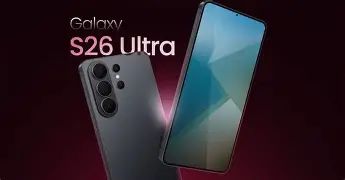
Out of the box the S26 Ultra strikes a premium note. The handset feels solid and well-balanced in the hand, with a refined frame and a matte glass back that resists fingerprints better than glossy finishes. Samsung continues to favor a large, gently curved display edge and a slim bezel profile that yields an immersive front surface for media and productivity.
Build quality is robust. The buttons are tactile, the SIM tray sits flush, and the device carries an IP68-rated feel for splash and dust resistance. For many buyers this balance of heft and ergonomics matters: the phone communicates quality without feeling unwieldy during one-handed use.
Display: a flagship canvas
The S26 Ultra’s display is among the strongest early selling points. It uses an advanced AMOLED panel with vibrant color reproduction, deep blacks, and excellent off-axis viewing. The adaptive refresh rate dynamically scales to conserve battery when static content is on screen, while ramping up for gaming and scrolling to deliver buttery motion.
Real-world use cases where the display shines include:
- Streaming high-resolution video with excellent color and contrast
- Reading and productivity tasks that benefit from high pixel density
- Mobile gaming with responsive touch sampling and smooth frame pacing
The display’s peak brightness makes the screen usable outdoors in bright sunlight, which is a practical advantage for commuters and outdoor photographers who preview shots on the device.
Performance and daily responsiveness
Under the hood, the S26 Ultra is powered by the latest flagship silicon available in the region (the exact chipset varies by market). Paired with ample RAM and fast UFS storage, the device boots quickly and keeps apps resident in memory for typical multitasking workflows. The experience is consistently fluid: app launches, switching, and gesture navigation have minimal lag.
Thermal behavior during sustained workloads—such as long gaming sessions or extended 4K video recording—is well-managed thanks to improved cooling pathways and optimized throttling algorithms. For users who prioritize performance for video editing, cloud multitasking, or emulation, the S26 Ultra delivers nearly all-day responsiveness without severe performance drops.
Camera system: versatility for real-world shooting
Samsung’s Ultra models have long been judged on camera capability, and the S26 Ultra continues that tradition by offering a flexible camera array designed to handle most shooting scenarios. Early impressions from the review unit highlight:
Discover deals on Mobile Phones — updated daily.
View Offers →- A high-resolution primary camera that produces detailed daytime shots and retains strong dynamic range
- Optical and periscope telephoto elements that allow for effective mid- and long-range zooming while preserving readable detail
- Improved night and low-light algorithms that balance noise reduction and detail retention
- Reliable autofocus and image stabilization for handheld video capture
Real-world use cases where the camera system is valuable:
- Travel photography: wide dynamic range and zoom versatility reduce the need to carry extra lenses
- Event photography: fast autofocus and stabilization help capture candid moments in mixed lighting
- Content creation: stable 4K/8K-capable video and good audio capture simplify mobile vlogging
Note that while computational processing improves colors and exposure, some photographers who prefer minimally processed output may need to shoot in Pro/RAW modes for more control. For buyers who care deeply about natural color profiles and low-noise high-ISO performance, testing the camera in representative scenarios (night scenes, indoor lighting, portraits) remains recommended.
Battery life and charging
Battery life on the S26 Ultra is solid for heavy users. With a combination of display efficiency and chipset improvements, the phone comfortably lasts through a full day of mixed usage—email, messaging, streaming, navigation, and some photography. Power users who heavily game or record long video sessions may need a top-up toward the end of the day, but the device supports fast wired charging which reduces downtime.
Wireless charging and reverse wireless charging remain useful conveniences: wireless charging provides a cable-free top-up for overnight charging, while reverse charging can power accessories in a pinch. Buyers who rely on maximum uptime should opt for a fast USB-C PD charger and consider enabling battery-saving features during extended outings.
Software and ecosystem
The S26 Ultra ships with Samsung’s latest One UI skin layered over Android. The interface emphasizes customization, productivity features, and deep integration with Samsung’s ecosystem—devices such as tablets, earbuds, and laptops benefit from cross-device continuity. Key software touchpoints include:
- DeX and desktop-like workflows for users who want a laptop replacement experience
- S Pen integration for note-taking, annotation, and quick sketches
- One UI enhancements that prioritize privacy controls and enhanced multitasking
For buyers invested in an ecosystem—Samsung TVs, wearables, or home appliances—the S26 Ultra becomes a center for seamless interactions. Those who prefer a cleaner Android experience should be comfortable with the level of preinstalled apps and customizations Samsung provides, which can be disabled or reordered.
Audio and haptics
Audio performance through stereo speakers is clear and loud enough for casual media consumption. The bottom and earpiece speaker blend well to produce a satisfying stereo image when watching videos or making hands-free calls. Haptic feedback is precise and can be tuned within settings for a more tactile typing and gaming experience. Users who value audiophile-level sound will still prefer wired or high-quality wireless headphones, but the onboard loudspeakers are very usable for day-to-day media.
Pros & Cons
- Pros:
- Premium build and ergonomic design with strong in-hand feel
- Excellent AMOLED display with adaptive refresh and high peak brightness
- Versatile camera system suitable for travel, events, and content creation
- Powerful performance for multitasking, gaming, and creative apps
- Robust software features and ecosystem integration including S Pen support
- Reliable battery life with fast wired and wireless charging options
- Cons:
- Higher price point typical of flagship Ultra devices
- No charger brick included in the box
- Large size may be cumbersome for one-handed users
- Computational camera processing may not satisfy purists without Pro/RAW use
Comparison: S26 Ultra versus common alternatives
For buyers deciding between premium options, the table below compares the Samsung Galaxy S26 Ultra with two conceptually similar devices: the previous-generation Galaxy Ultra and a high-end competitor. This table focuses on categories most buyers care about—display, camera versatility, battery, and productivity features.
| Model | Display | Camera Strengths | Battery & Charging | Key Productivity Features |
|---|---|---|---|---|
| Galaxy S26 Ultra | Large AMOLED, adaptive refresh, high peak brightness | High-resolution primary, telephoto/periscope zoom, strong low-light processing | All-day battery with fast wired/wireless charging; reverse wireless | S Pen support, DeX, deep Samsung ecosystem integration |
| Galaxy S25 Ultra | AMOLED, high refresh, slightly lower peak brightness | Very capable primary and zoom, incremental improvements vs earlier models | Good battery life; fast charging (charger sold separately) | S Pen, mature One UI features |
| Competitor Flagship | AMOLED/OLED, strong color accuracy, force-touch variants | Competitive main sensor, usually different approach to zoom and color tuning | Similar endurance; charging speeds vary by brand | Different ecosystem strengths; may emphasize cross-device continuity with other brand products |
Who should consider the S26 Ultra?
The Galaxy S26 Ultra is well suited to buyers who care about:
- Photography versatility without carrying additional lenses—travelers, social media creators, family photographers
- Productivity on the go—professionals who use the S Pen, DeX, and robust multitasking to bridge phone-to-laptop workflows
- Media consumption—users who value a top-tier display for streaming and gaming
- Future-proofing—buyers who prioritize flagship performance and software support
It may be less ideal for buyers who prefer smaller phones, who prioritize the lowest possible price, or who want a phone free of manufacturer customizations and preinstalled apps.
Discover deals on Mobile Phones — updated daily.
Shop Amazon →Buying guide: what to check before purchase
When evaluating the S26 Ultra, consider these practical questions to match the right configuration and accessories to your needs:
1. Which storage and RAM variant?
Pick a configuration aligned with how the device will be used. For heavy photo/video shooters and those who keep many large apps or offline media, higher storage tiers are recommended. If the typical workflow includes intensive multitasking or local editing, prioritize higher RAM variants when available.
2. Will the stylus matter?
If note-taking, precise annotation, or sketching is important, ensure the S Pen (or equivalent stylus support) is present in the variant being purchased. Some regions or SKUs may differ in bundled accessories.
3. Choose the right charger
Since a wall charger may not be included, buy a compatible USB-C PD charger that supports the phone’s fast-charge profile. A charger with sufficient wattage shortens top-up times and makes the device more useful during travel.
4. Carrier vs unlocked
Decide between a carrier-locked unit or an unlocked one. Unlocked phones offer freedom to switch carriers and often better resale value. Confirm band support for travel if frequent international use is expected.
5. Case and screen protection
Invest in a slim protective case and compatible screen protector. The large glass surface benefits from protection against drops and scratches, particularly for buyers who carry the phone in pockets or bags with keys and other items.
6. Software update expectations
Check the manufacturer’s promise for OS and security updates. Buyers who want long-term compatibility should prioritize models with a multi-year update commitment.
Real-world tips from initial use
- For travel photography, use the telephoto for distant subjects and the wide camera for landscapes; switch to Pro mode when exposure control is necessary.
- Enable adaptive refresh for battery savings when heavy motion is not required; use maximum refresh during gaming sessions for smoother input.
- Calibrate haptics and keyboard feedback to personal preference to improve daily typing comfort.
- Use cloud backup paired with local encrypted backup if switching devices frequently or for extra peace of mind with large photo libraries.
Final thoughts
The Galaxy S26 Ultra makes a convincing case as a flagship that balances display excellence, camera versatility, and productivity features. Its strong hardware foundation and software polish cater to a wide audience—from content creators and power users to buyers who simply want a premium daily driver that lasts through a full day of varied tasks. While the price remains at the premium end of the spectrum and the large size may not suit everyone, the S26 Ultra stands out for those who prioritize a top-tier display, a flexible camera system, and integrated productivity tools such as the S Pen and DeX. For buyers weighing trade-offs, consider the form factor and accessory needs—especially charging and protection—before committing.
For a first look, the S26 Ultra impresses across the most important practical dimensions that typical buyers care about: reliable battery life, a standout screen for media, and a camera system that reduces the need for extra equipment. Those priorities will determine whether this flagship is a right fit for day-to-day life and long-term ownership.